Learn about the 10 mistakes new managers make and how to avoid them. This course is for new managers or any director or human resource professional helping support a new manager.
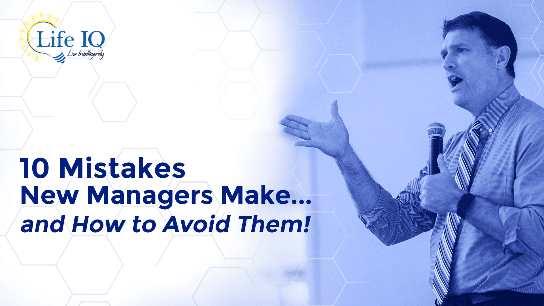
It’s your first day. New role. New responsibilities. New organization. New people. New culture. Everything is new. Everything.
Or…
It’s your first day. Changed role. Changed responsibilities. Same organization. Same people. Same culture. But everything has changed. Everything.
This is the reality of a new manager. It doesn’t matter if you’ve been with an organization for 20 years or 20 minutes, it’s a whole new ballgame now.
Your role is unlike any other pre-management position you’ve held before. The job description is much broader including verbs like lead, direct, and determine. The responsibilities and stakes are higher with the ability to impact – either positively or negatively – on a greater scope.
The sociological implications are significant. Remember all those conversations you used to have about your manager? They are having those conversations about you. What are they saying? What do you wish your manager would have known or done at the time you reported to them? It’s not enough that you are beginning a challenging new role; you are doing it on a stage.
And it’s no longer about what you can accomplish as an individual contributor, but rather what you can accomplish through others as an individual and team developer.
First impressions are everything. Your people want to know if you are competent, capable, and worthy of their allegiance. And they’ll make that decision within a matter of days. The first conversations, the first meetings, the first initiatives all set precedents that can take months to undo if you start out on the wrong foot.
Start on the right foot. Learn about the 10 mistakes new managers make and how to avoid them. This course is for new managers or any director or human resource professional helping support a new manager.

Neil Ihde is a speaker, lecturer, consultant and founder of Life IQ where he motivates groups and individuals to work, play, relate and live intelligently. He has worked with numerous managers, directors, corporate leaders, and teams to improve their personal and professional effectiveness. Neil has worked with over 25 Fortune 500 companies including AT&T, Discover Card, Domino’s, Transamerica, GE among others. Neil has also consulted internationally with clients from a dozen countries. He is a TEDx speaker and his Life IQ YouTube channel recently eclipsed a half-million views. Neil's academic background includes a B.A. in Psychology, a B.A. in Sociology, and a MA in Counseling. Neil and his wife Deb have two children and live in Appleton, Wisconsin.
Provincial regulators of CPAs in Canada do not require that independent providers of CPD be approved to offer courses. Instead, individual CPAs are responsible for assessing whether a CPD activity meets their requirements, and may take activities from any source provided those requirements are met.
Every course offered on LearnFormula is delivered by a qualified subject matter expert or learning organization, and advances learning objectives that are relevant to the responsibilities or professional competencies of Canadian CPAs. All activities on LearnFormula are quantifiable in terms of hours, and are also verifiable, in that users receive documented evidence of their attendance via a certificate of completion after finishing a course (and this certificate is stored by LearnFormula indefinitely). Nearly 100,000 Canadian CPAs successfully satisfy their CPD requirements via LearnFormula on an annual basis.
