
search
Master anti-money laundering regulations and implement robust compliance frameworks to protect your digital finance operations from financial crime and regulatory penalties.
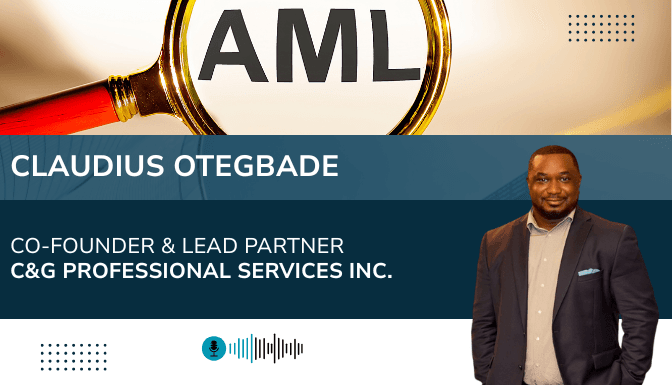
As fintech platforms, payment innovators, and virtual currency businesses continue to transform financial services, regulatory expectations surrounding anti-money laundering (AML) compliance are evolving just as rapidly. Businesses operating within these sectors face unique challenges in identifying customers, monitoring transactions, managing financial crime risks, and meeting increasingly complex reporting obligations. Failure to establish an effective compliance framework can expose organisations to significant regulatory, financial, and reputational consequences.
This course examines how AML obligations apply to fintech companies and virtual currency businesses under the Proceeds of Crime (Money Laundering) and Terrorist Financing Act (PCMLTFA). Participants will gain practical insight into designing risk-based compliance programs, implementing effective controls, meeting reporting requirements, and preparing for regulatory examinations. The session also explores how FINTRAC assesses compliance programs and identifies common weaknesses encountered during regulatory reviews.
Key Topics Discussed:

Co-Founder & Lead Partner | C&G Professional Services Inc.
Claudius is an AML and sanctions consultant with over 15 years’ experience across anti-money laundering, forensic accounting, fraud investigation, and regulatory audits. Before co-founding C&G, he spent five years in the AML practices of MNP LLP and Grant Thornton LLP, and most recently served as Director, Compliance at WFCU Credit Union in Ontario. Earlier, he was an auditor with PKF International in Nigeria and a forensic auditor to indigenous oil and gas firms. He has led AML effectiveness reviews and gap analyses for PCMLTFA-regulated entities — financial institutions, credit unions, MSBs, precious metals and stones dealers, and securities dealers — covering policies and procedures, risk assessments, transaction monitoring, and reporting. Claudius is a regular speaker at AML conferences across Canada and a past board member of the ACFCS Toronto Chapter. He holds a Bachelor’s in Accounting and an MBA, and is an internationally trained Chartered Accountant (CA), CPA (New York), CAMS, CFE, CFCS, CFI, CBP, and CCI — an alumnus of Seneca College’s Fraud Examination and Forensic Accounting graduate program.
Provincial regulators of CPAs in Canada do not require that independent providers of CPD be approved to offer courses. Instead, individual CPAs are responsible for assessing whether a CPD activity meets their requirements, and may take activities from any source provided those requirements are met.
Every course offered on LearnFormula is delivered by a qualified subject matter expert or learning organization, and advances learning objectives that are relevant to the responsibilities or professional competencies of Canadian CPAs. All activities on LearnFormula are quantifiable in terms of hours, and are also verifiable, in that users receive documented evidence of their attendance via a certificate of completion after finishing a course (and this certificate is stored by LearnFormula indefinitely). Nearly 100,000 Canadian CPAs successfully satisfy their CPD requirements via LearnFormula on an annual basis.