Seamlessly add 3D models to create AR projects
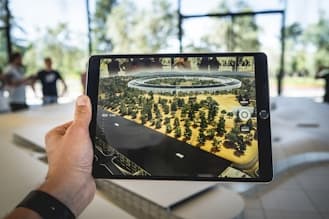
Embark on an exciting journey into the world of Augmented Reality (AR) with our course on using Google's Model Viewer technology. This comprehensive program is designed for both beginners and experienced developers, providing a hands-on approach to creating immersive AR projects.
Throughout the course, participants will delve into the fundamentals of AR development, gaining a solid understanding of the principles behind Google's Model Viewer technology.
We'll explore the integration of 3D models into AR experiences, leveraging the powerful capabilities of Model Viewer to enhance realism and interactivity.
Participants will remix pre-made templates to seamlessly create their own Augmented Reality projects and learn where to get 3D assets, both free and paid, to use in their projects.
Practical sessions will cover topics such as model annotation and conversion, ensuring that students are well-equipped to tackle real-world AR development challenges.
By the end of the course, participants will have the skills to design and deploy their own AR projects using Google's Model Viewer, empowering them to contribute to the ever-growing landscape of augmented reality applications.
Join us and bring your ideas to life in the exciting realm of AR development!

Adobe Creative Educator
Kelvin Kobina Fosu is a humanitarian and an ex-Google-Certified Educator level 1. Kelvin is now an Adobe Creative Educator specializing in Generative AI for education and Augmented reality for education. Kelvin completed his Bachelor's Degree of Fine Arts from Kwame Nkrumah University of Science and Technology in Ghana, majoring in painting. He then took a certification course on Computer Science Principles using App Inventor and one in Business Strategies for a Better World. He has an overarching goal of putting people and the planet over profit, and he believes in using intuitive tools for education and experiential learning. Kelvin worked as a STEAM (Science, Technology, Engineering, Arts, and Mathematics) programs manager for the Girls Education Initiative of Ghana (GEIG). He developed the STEAM curriculum for students and assisted four in gaining web development scholarships at Soronko Academy in Accra. He also freelanced at Soronko Academy, leading a team of young girls to win the 'International Girls in ICT Day' celebration. Kelvin founded AnybodyCanDevelop (ABCD) when he discovered that learners were introduced to programming while at GEIG and started finding other software of interest. Studying some of these tools led him to develop content focused on the arts and technology, using intuitive technology to democratize learning. His content is being used in 174 countries across the globe by people of all ages. Kelvin is now a learning management associate lead at Brainiqs Projects Lab and a learning and development team member at GhanaTechLab. He creates content to help improve workers' and students' learning outcomes. He has helped develop a mobile application curriculum for students and an artificial intelligence curriculum for GhanaTechLab's Africa Artificial Intelligence Accelerator program.
Provincial regulators of CPAs in Canada do not require that independent providers of CPD be approved to offer courses. Instead, individual CPAs are responsible for assessing whether a CPD activity meets their requirements, and may take activities from any source provided those requirements are met.
Every course offered on LearnFormula is delivered by a qualified subject matter expert or learning organization, and advances learning objectives that are relevant to the responsibilities or professional competencies of Canadian CPAs. All activities on LearnFormula are quantifiable in terms of hours, and are also verifiable, in that users receive documented evidence of their attendance via a certificate of completion after finishing a course (and this certificate is stored by LearnFormula indefinitely). Nearly 100,000 Canadian CPAs successfully satisfy their CPD requirements via LearnFormula on an annual basis.
