Uncover the dark side of technological innovation and master actionable strategies to defend your organization against the rising tide of sophisticated digital scams and data breaches.
As organisations accelerate digital transformation, the intersection between cybersecurity and fraud risk has become increasingly critical. Cyber incidents are no longer confined to IT disruption—they are a primary driver of financial loss, fraud schemes, and regulatory exposure. Fraud examiners must now understand how control failures in cybersecurity environments directly enable fraudulent activity.
From business email compromise and credential theft to third-party vulnerabilities and data breaches, cyber-enabled fraud schemes exploit weaknesses in governance, identity management, and operational controls. Traditional fraud frameworks often fail to fully capture these risks, leaving organisations exposed to complex, fast-evolving threats.
This session explores how cybersecurity failures translate into fraud risk, providing a practical framework for identifying, assessing, and mitigating cyber-enabled fraud. It bridges the gap between fraud examination, audit, and cybersecurity disciplines, equipping professionals with the tools to evaluate modern risk environments and strengthen organisational resilience.
Key Topics Discussed:

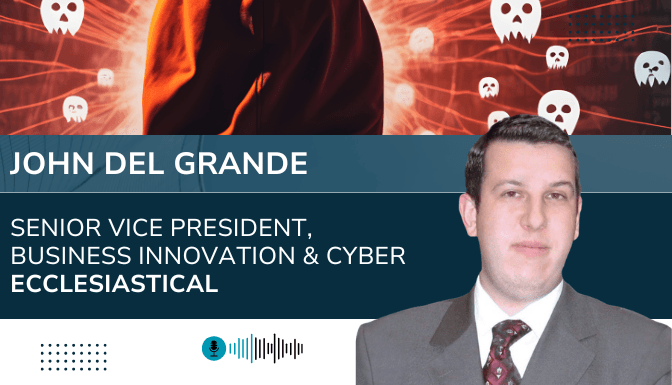
Senior Vice President, Business Innovation & Cyber | Ecclesiastical
John is currently Senior VP of Business Innovation for Ecclesiastical Canada where he oversees enterprise tools, cybersecurity, and infrastructure; enhancing business capabilities through innovation, and supporting project management for successful initiative execution. He holds a B.Comm from Ryerson University and has active certifications as a CISSP & CFE. Previous roles were with PC Financial/Loblaws where he held various progressive senior roles including Head of Cybersecurity and Chief Architect. He was also an 11-year Trustee with one of the largest school boards in Canada.
Provincial regulators of CPAs in Canada do not require that independent providers of CPD be approved to offer courses. Instead, individual CPAs are responsible for assessing whether a CPD activity meets their requirements, and may take activities from any source provided those requirements are met.
Every course offered on LearnFormula is delivered by a qualified subject matter expert or learning organization, and advances learning objectives that are relevant to the responsibilities or professional competencies of Canadian CPAs. All activities on LearnFormula are quantifiable in terms of hours, and are also verifiable, in that users receive documented evidence of their attendance via a certificate of completion after finishing a course (and this certificate is stored by LearnFormula indefinitely). Nearly 100,000 Canadian CPAs successfully satisfy their CPD requirements via LearnFormula on an annual basis.
