Uncover the red flags of deceptive accounting and master the forensic techniques required to investigate and expose complex financial manipulation.
Financial statement fraud is rare compared to other forms of fraud, but when it occurs, the impact is disproportionately severe. Consistently highlighted by the Association of Certified Fraud Examiners, these schemes generate some of the highest losses on record, often within organisations that initially appear well governed, with functioning audit committees, external audits, and established internal controls — until those safeguards are bypassed or prove insufficient to detect sophisticated manipulation.
This session equips fraud examiners and forensic accountants with a practical framework for identifying, analysing, and investigating financial statement fraud. It explores how earnings manipulation is embedded within accounting judgments and disclosures, the analytical techniques and forensic tools used to detect anomalies, and how to structure an effective investigation once suspicion arises. The discussion also considers key governance and oversight weaknesses that enable these schemes, and how they can be strengthened to reduce exposure and improve detection.
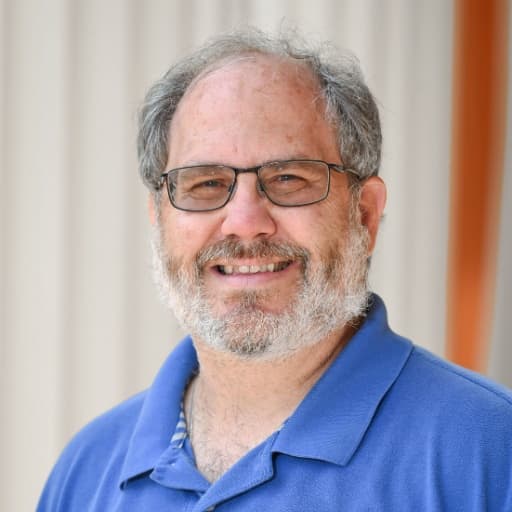
Professor of Accounting at Susquehanna University
Andrew Felo is a Professor of Accounting at Susquehanna University, where he has served since August 2025 after previously holding the role of Associate Professor of Accounting at the university from 2020 to 2025. Prior to joining Susquehanna University, he was an Associate Professor of Accounting at Nova Southeastern University from 2011 to 2020 and at The Pennsylvania State University from 2007 to 2011. Earlier in his academic career, he served as an Assistant Professor of Accounting at The Pennsylvania State University - Great Valley and Millsaps College. Dr. Felo earned both his PhD and MS in Accounting from Binghamton University and holds a BSBA in Accounting from Bucknell University. With more than two decades of experience in accounting education, his academic career has focused on teaching, research, and advancing the field of accounting through higher education.
Provincial regulators of CPAs in Canada do not require that independent providers of CPD be approved to offer courses. Instead, individual CPAs are responsible for assessing whether a CPD activity meets their requirements, and may take activities from any source provided those requirements are met.
Every course offered on LearnFormula is delivered by a qualified subject matter expert or learning organization, and advances learning objectives that are relevant to the responsibilities or professional competencies of Canadian CPAs. All activities on LearnFormula are quantifiable in terms of hours, and are also verifiable, in that users receive documented evidence of their attendance via a certificate of completion after finishing a course (and this certificate is stored by LearnFormula indefinitely). Nearly 100,000 Canadian CPAs successfully satisfy their CPD requirements via LearnFormula on an annual basis.
