This course explores concepts and profile of the white collar fraudster, so individuals can take pro-active steps

The fraud triangle is often referred to when studying aspects of white collar crime and fraudulent acts. Two individuals who deserve the most credit for the fraud triangle theory are early criminology researchers Edwin Sutherland and Donald Cressey. Sutherland and Cressey, both criminologists, were professors and researchers teaching criminology in sociology departments.
Sutherland developed the "differential association" theory of why people commit crimes. He believed criminal behavior is learned and not inherited.
The person most associated with developing the fraud triangle was Donald Cressey. Cressey was a co-author with and student of Edwin Sutherland. He defined the fraud problem as a "violation of a position of financial trust that the person originally took in good faith.”
Although Cressey and Sutherland were linked to the concepts embedded in the fraud triangle, neither referred to the term “fraud triangle” or the visual depiction.
Understanding fraud and why it occurs requires a deep understanding of the philosophy and concepts behind each leg of the fraud triangle: pressure, opportunity and rationalization. By understanding these concepts and the profile of the typical white collar fraudster, individuals can begin taking proactive steps towards fraud mitigation.
Field of Study: Specialized Knowledge
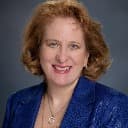
Lynn Fountain has over 45 years of experience spanning public accounting, corporate accounting and consulting. 24 years of her experience has been working in the areas of internal and external auditing. She is a subject matter expert in multiple fields including internal audit, ethics, fraud evaluations, Sarbanes-Oxley, enterprise risk management, governance, financial management and compliance. Ms. Fountain has held two Chief Audit Executive positions for international companies. In 2011, as the Chief Audit Executive for an international construction/ engineering firm, she was involved in the active investigation of a joint venture fraud. The investigation included work with the FBI and ultimately led to indictment of the perpetrators and recovery of $13M. Ms. Fountain is currently engaged in her own training and consulting business and is a regular trainer for the AICPA. Ms. Fountain is the author of three separate technical books. “Raise the Red Flag – The Internal Auditors Guide to Fraud Evaluations” was published by the Institute of Internal Auditors Research Foundation. -“Leading The Internal Audit Function” and -“Ethics and The Internal Auditor Political Dilemma” were published by Taylor & Francis In addition Ms. Fountain was a contributing author to the certification program exam for the National Association of Accountants. She also has certificate programs on various on-line platforms. Ms. Fountain has performed as an adjunct instructor for the School of Business for Grantham University and developed the first internal audit curriculum for the School of Business at the University of Kansas. Ms. Fountain obtained her BSBA from Pittsburg State University and her MBA from Washburn University in Kansas. She has her CGMA, CRMA credentials and CPA certificate (non-active).
Provincial regulators of CPAs in Canada do not require that independent providers of CPD be approved to offer courses. Instead, individual CPAs are responsible for assessing whether a CPD activity meets their requirements, and may take activities from any source provided those requirements are met.
Every course offered on LearnFormula is delivered by a qualified subject matter expert or learning organization, and advances learning objectives that are relevant to the responsibilities or professional competencies of Canadian CPAs. All activities on LearnFormula are quantifiable in terms of hours, and are also verifiable, in that users receive documented evidence of their attendance via a certificate of completion after finishing a course (and this certificate is stored by LearnFormula indefinitely). Nearly 100,000 Canadian CPAs successfully satisfy their CPD requirements via LearnFormula on an annual basis.
