Navigating Receiverships, CCAA, and BIA Sales with Strategic and Legal Precision
Distressed M&A in Canada operates at the intersection of insolvency law, creditor rights, and transactional strategy. When a company enters financial distress, traditional deal dynamics shift: shareholders lose control, creditors assert influence, and courts supervise outcomes. Asset sales become not merely transactions, but restructuring tools.
This webinar provides a structured and practical examination of distressed acquisition pathways under the federal insolvency regime, including proceedings under the Bankruptcy and Insolvency Act (BIA) and the Companies’ Creditors Arrangement Act (CCAA). Participants will explore how approval and vesting orders function as the “cleansing mechanism” in distressed transactions, the differing dynamics of receiverships versus debtor-led restructurings, and how statutory timelines shape leverage and negotiation strategy.
Designed for Canadian corporate, insolvency, and litigation practitioners, this session moves beyond doctrine to focus on risk allocation, court approval standards, and transaction execution realities in distressed environments.
Key Learning Outcomes:

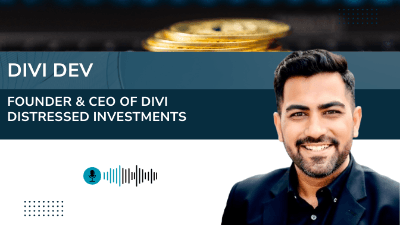
Founder & CEO | Divi Distressed Investments
Divi Dev, founder of Divi Distressed Investments, is a distinguished Restructuring and Insolvency lawyer with nearly seven years of cross-border expertise. Dually licensed in Canada and India as a lawyer, Divi also qualifies as an Insolvency Professional in India and holds credentials as a commercial mediator and negotiator. Divi’s practice encompasses complex, high-stakes cases in rescue finance, distressed debt, distressed M&A, turnaround management, special situations, and cross-border insolvency. With a sophisticated background in Big Law, consulting, and private equity, he combines analytical rigor with strategic innovation to deliver tactical outcomes in challenging financial circumstances. His career spans roles at an elite insolvency boutique, a Big Four accounting firm, and a national law firm in Toronto, Canada. In India, he served as an insolvency litigator and as an investment associate at the distressed debt platform of a leading American private equity firm. These roles have afforded him a nuanced understanding of diverse financial landscapes and the agility to navigate complex legal frameworks with precision. Beyond corporate restructuring, Divi is deeply committed to policy development and social impact. He has participated in projects and fellowships with prominent institutions, including Harvard University’s South Asia Institute, the University of Chicago, the Indian Parliament, the United Nations, and the World Bank. An advocate for child rights, Divi has volunteered in this space for over a decade and was recognized as a UN Global Schools Ambassador in 2018.
Provincial regulators of CPAs in Canada do not require that independent providers of CPD be approved to offer courses. Instead, individual CPAs are responsible for assessing whether a CPD activity meets their requirements, and may take activities from any source provided those requirements are met.
Every course offered on LearnFormula is delivered by a qualified subject matter expert or learning organization, and advances learning objectives that are relevant to the responsibilities or professional competencies of Canadian CPAs. All activities on LearnFormula are quantifiable in terms of hours, and are also verifiable, in that users receive documented evidence of their attendance via a certificate of completion after finishing a course (and this certificate is stored by LearnFormula indefinitely). Nearly 100,000 Canadian CPAs successfully satisfy their CPD requirements via LearnFormula on an annual basis.
