This course is the second in a series on key economic indicators.
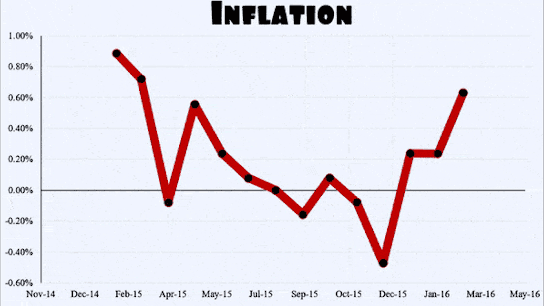
This course is the second in a series on key economic indicators. Students will learn about price indices and inflation. A key objective of this course is to provide CPAs and other business professionals, looking to improve their business acumen toolbox of skills, with a practical overview of how statistical agencies measure changes in the average price level of good and services in an economy over time. We start by learning about simple index numbers and then progress into a discussion of weighted price indices. Specifically, we learn the mechanics of how the Consumer Price Index (CPI) is constructed in the U.S. and Canada. Afterwards, we learn how to put price indices to work by learning how to use them to calculate the inflation rate and how to adjust nominal data series into real series so they can be compared over time. We also discuss the causes and consequences of inflation and hyperinflation. Finally, we cover how and when the official figures are released to the public, their impact on markets, and then reinforce some of the concepts with a short active learning exercise. (Note: All videos in the series are self-contained and can be watched in any order.)

Associate Professor of Economics | King's University College at Western
#Dr. Jason Dean **Associate Professor of Economics and Applied Economist** Dr. Jason Dean is an Associate Professor of Economics at King’s University College at Western University and holds a PhD in Economics from McGill University. He teaches university students and working professionals, drawing on experience in academic research, economic consulting, public policy and the practical use of artificial intelligence. His CPD work covers applied economics and emerging AI tools. His approach is practical and evidence-based: explain how something works, identify the assumptions and limitations, and give learners a framework they can use in their own work. Jason has worked extensively with generative AI since the emergence of ChatGPT, incorporating it into teaching, research and professional education. He has delivered three presentations for Haver Analytics, most recently a June 2026 session on Model Context Protocol (MCP) servers. He has also presented on AI for the Canadian Chamber of Commerce and the Toronto Association for Business and Economics. His presentations have covered AI productivity tools, copyright, privacy, emerging capabilities and the practical implications of using AI in professional work. Before joining King’s, Jason worked as an associate and health economist at Analysis Group and as an economic research analyst at CEP News. His consulting work contributed to published studies of healthcare costs and treatment outcomes. He has also taught economics to CPA students at Sheridan College. Jason’s teaching career has taken him across Canada, Japan and China. In 2024, he was a visiting professor in Canadian Studies at Kwansei Gakuin University in Japan, where he taught Canadian Business Culture and Canadian Economic History. He has also taught Labour Economics at Wuhan University of Technology and Labour Economics and International Trade and Finance at Renmin University in Beijing. His experience teaching in China later prompted him to develop his Economics of China course at King’s. His Canadian teaching experience also includes Wilfrid Laurier University, McMaster University Continuing Education and McGill University. Jason has contributed assessment questions, digital learning activities and instructional materials to economics resources for McGraw-Hill and Pearson. His research examines questions with practical consequences for households, workers and employers. What happens when immigrants cannot find work related to their education? How does a fall in income affect a renter’s ability to move? Do Canadian housing and stock markets share a long-run relationship? His work has appeared in journals including *Applied Economics*, *Regional Science and Urban Economics*, *Cliometrica* and the *Journal of Housing Economics*. As an Associate Researcher with the Montreal Economic Institute, Jason studies how taxes and benefit reductions affect the financial return to work. His policy publications examine the circumstances of low-income seniors, people taking second jobs and workers moving off income assistance. He has also provided media commentary on housing, labour markets, artificial intelligence and the Canadian economy. Jason also holds an MA in Economics from the University of Guelph and an Honours BBA from Wilfrid Laurier University. --- ## MONTREAL ECONOMIC INSTITUTE | RESEARCH REPORTS - **“End Penalties That Punish Low-Income Seniors Who Work”** (2026), with the collaboration of Gabriel Giguère. - **“The Benefits of Eliminating the Middle-Income Tax Bracket”** (2025), with the collaboration of Emmanuelle B. Faubert. - **“Full-Time Struggle and Two-Job Juggle: A Tax Holiday for Canadians to Fight Rising Costs”** (2024), with the collaboration of Renaud Brossard. - **“Canada’s Welfare Wall: Enhancing the CWB for Full-Time Employment”** (2023), with the collaboration of Renaud Brossard. - **“Labour Shortages: Helping a Trapped Pool of Potential Workers Help Themselves”** (2023), with the collaboration of Célia Pinto Moreira. --- ## POLICY COMMENTARY - **“It’s time to give the middle class a real tax break.”** *The Hamilton Spectator*, March 17, 2025. - **“Hey Ottawa, workers with two jobs could use a break.”** *The Hamilton Spectator*, January 13, 2024. - **“Workers Benefit not working for workers.”** *Financial Post*, May 4, 2023. --- ## PEER-REVIEWED RESEARCH | ECONOMICS - Dilmaghani, M., and Dean, J. **“Sexual orientation and intra-household specialization before and after the legal recognition of same-sex marriage in Canada.”** *Applied Economics*, 56(29), 3460–3484 (2024). - Singh, A., McFarlane, A., Dean, J., and Erenburg, G. **“Are Canadian Residential Real Estate and Stock Markets Segmented or Integrated?”** *Empirical Economics Letters*, 23(7) (2024). - Dean, J., and Steele, M. **“Income decline, financial insecurity, landlord screening and renter mobility.”** *Regional Science and Urban Economics*, 95, 103797 (2022). - Dean, J., and Geloso, V. **“The linguistic wage gap in Quebec, 1901 to 1951.”** *Cliometrica*, 16, 615–637 (2022). - Dilmaghani, M., and Dean, J. **“Sexual orientation and homeownership in Canada.”** *Journal of Housing Economics*, 49, 101688 (2020). - Dean, J. **“Does it matter if immigrants work in jobs related to their education?”** *IZA Journal of Development and Migration*, 8, Article 7 (2018). - Dilmaghani, M., and Dean, J. **“Labor Market Attainment of Canadian Jews During the First Two Decades of the 20th Century.”** *Contemporary Jewry*, 38, 49–77 (2018). - Dean, J., and Dilmaghani, M. **“Economic Integration of Pre-WWI Immigrants from the British Isles in the Canadian Labour Market.”** *Journal of International Migration and Integration*, 17(1), 55–76 (2016). - Dilmaghani, M., and Dean, J. **“Religiosity and female labour market attainment in Canada: the Protestant exception.”** *International Journal of Social Economics*, 43(3), 244–262 (2016). --- ## COAUTHORED RESEARCH | HEALTH ECONOMICS AND OUTCOMES - **“Systematic review of long-acting injectables versus oral atypical antipsychotics on hospitalization in schizophrenia.”** *Current Medical Research and Opinion*, 30(8), 1643–1655 (2014). - **“Burden of schizophrenia on selected comorbidity costs.”** *Expert Review of Pharmacoeconomics & Outcomes Research*, 14(2), 259–267 (2014). - **“Impact of omalizumab on emergency-department visits, hospitalizations, and corticosteroid use among patients with uncontrolled asthma.”** *Annals of Allergy, Asthma & Immunology*, 109(1), 59–64 (2012). --- ## OTHER RESEARCH REPORTS - Dean, J., and Dilmaghani, M. **“Religious Diversity and Labour Market Attainment: Nova Scotia and New Brunswick, 1911–2011.”** Atlantic Research Group on Economics of Immigration, Aging and Diversity (2015).
Provincial regulators of CPAs in Canada do not require that independent providers of CPD be approved to offer courses. Instead, individual CPAs are responsible for assessing whether a CPD activity meets their requirements, and may take activities from any source provided those requirements are met.
Every course offered on LearnFormula is delivered by a qualified subject matter expert or learning organization, and advances learning objectives that are relevant to the responsibilities or professional competencies of Canadian CPAs. All activities on LearnFormula are quantifiable in terms of hours, and are also verifiable, in that users receive documented evidence of their attendance via a certificate of completion after finishing a course (and this certificate is stored by LearnFormula indefinitely). Nearly 100,000 Canadian CPAs successfully satisfy their CPD requirements via LearnFormula on an annual basis.
