Practical strategies to identify psychological traps, manage bias, and uphold professional integrity in the modern workplace.
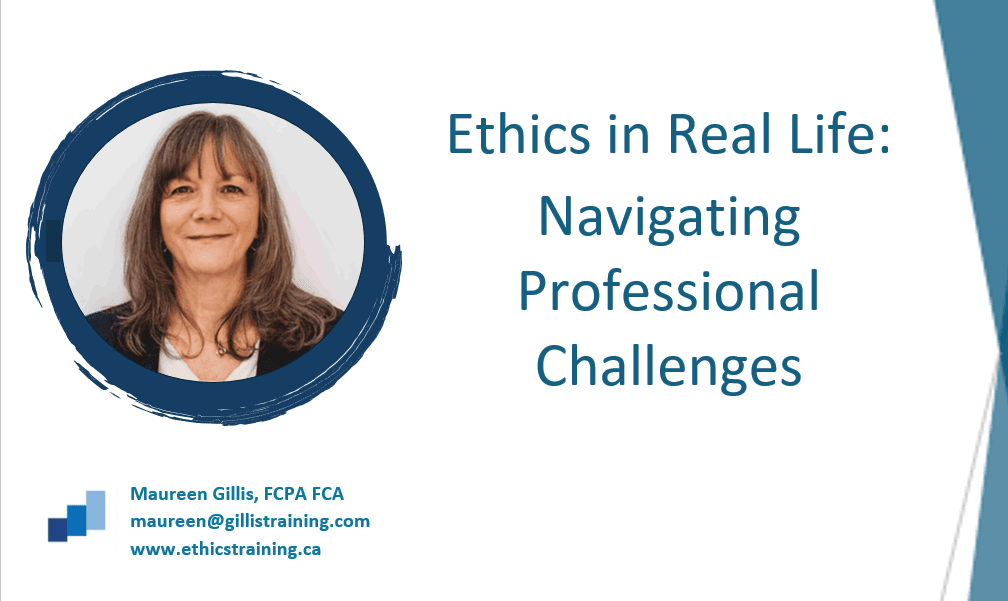
This course examines the practical application of ethical standards for professional accountants through an analysis of real-world disciplinary cases and contemporary scandals in the news. It explores the psychological and organizational factors that contribute to unethical behaviour, including unconscious biases, social pressures, and the impact of emerging technologies like artificial intelligence. Participants review a formal ethical decision-making framework and learn strategies to maintain professional skepticism, manage internal controls, and foster an ethical culture within their organizations.
Topics Covered:

FCPA, FCA
Maureen R Gillis, FCPA FCA, is a highly sought after facilitator for ethics courses, having taught ethics for accountants for 10 years. She facilitates adult learning in topics related to ethics, leadership, success, and human behaviour. With formal training in adult learning and professional training in human resources management along with a designation as a Fellow Chartered Professional Accountant, Fellow Chartered Accountant (Canada) Maureen brings a multi-disciplinary perspective to her courses. She has taught at three universities and facilitated professional development sessions for members of professional organizations. With professional leadership experience, across sectors, she brings professional and practical insight to her courses. During her career, Maureen has also been active in volunteer roles as a coach and with organizations such as the Canadian Institute of Chartered Accountants Public Sector Accounting Board, Chartered Professional Accountants Canada, the Institute of Chartered Accountants of Nova Scotia, Junior Achievement of Nova Scotia, the Financial Management Institute, and the Chamber of Commerce, among others. She also served as a volunteer financial advisor for an NGO in Ghana, West Africa. Today, Maureen enjoys delivering relevant professional development courses to leaders and members of professional associations on current topics that supports their ongoing development and growth.
Provincial regulators of CPAs in Canada do not require that independent providers of CPD be approved to offer courses. Instead, individual CPAs are responsible for assessing whether a CPD activity meets their requirements, and may take activities from any source provided those requirements are met.
Every course offered on LearnFormula is delivered by a qualified subject matter expert or learning organization, and advances learning objectives that are relevant to the responsibilities or professional competencies of Canadian CPAs. All activities on LearnFormula are quantifiable in terms of hours, and are also verifiable, in that users receive documented evidence of their attendance via a certificate of completion after finishing a course (and this certificate is stored by LearnFormula indefinitely). Nearly 100,000 Canadian CPAs successfully satisfy their CPD requirements via LearnFormula on an annual basis.
