This session will focus on various interview concepts and methods.
In forensic accounting, interviewing is used to obtain important information from witnesses and suspects. An important aspect is the ability of investigators to obtain accurate and reliable information from victims, witnesses and the suspects or any interviewee. The interview process is an essential part of information gathering for any investigation.
The importance of improving the quality of the interviewing with the potential for visual recording of all interviews should be placed high on the agenda of all organizations across the globe. A properly conducted forensic interview can result in an extreme benefit regarding collection of information. The interviewer’s role is to develop a full understanding of the facts.
There is a distinct difference between a forensic interview and a criminal interrogation. Typically, forensic auditors will not be involved in interrogations. The Canadian or U.S. forensic accounting profession does not have a standardized interview model to truly equip its professionals with the interview tools required to elicit confessions ethically. Majority of their skills are developed through experience, and not through a standardized model of training.
This session will focus on various interview concepts and methods.
2 activities • 5 videos • duration: 1h 52m
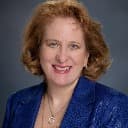
Lynn Fountain has over 45 years of experience spanning public accounting, corporate accounting and consulting. 24 years of her experience has been working in the areas of internal and external auditing. She is a subject matter expert in multiple fields including internal audit, ethics, fraud evaluations, Sarbanes-Oxley, enterprise risk management, governance, financial management and compliance. Ms. Fountain has held two Chief Audit Executive positions for international companies. In 2011, as the Chief Audit Executive for an international construction/ engineering firm, she was involved in the active investigation of a joint venture fraud. The investigation included work with the FBI and ultimately led to indictment of the perpetrators and recovery of $13M. Ms. Fountain is currently engaged in her own training and consulting business and is a regular trainer for the AICPA. Ms. Fountain is the author of three separate technical books. “Raise the Red Flag – The Internal Auditors Guide to Fraud Evaluations” was published by the Institute of Internal Auditors Research Foundation. -“Leading The Internal Audit Function” and -“Ethics and The Internal Auditor Political Dilemma” were published by Taylor & Francis In addition Ms. Fountain was a contributing author to the certification program exam for the National Association of Accountants. She also has certificate programs on various on-line platforms. Ms. Fountain has performed as an adjunct instructor for the School of Business for Grantham University and developed the first internal audit curriculum for the School of Business at the University of Kansas. Ms. Fountain obtained her BSBA from Pittsburg State University and her MBA from Washburn University in Kansas. She has her CGMA, CRMA credentials and CPA certificate (non-active).
Provincial regulators of CPAs in Canada do not require that independent providers of CPD be approved to offer courses. Instead, individual CPAs are responsible for assessing whether a CPD activity meets their requirements, and may take activities from any source provided those requirements are met.
Every course offered on LearnFormula is delivered by a qualified subject matter expert or learning organization, and advances learning objectives that are relevant to the responsibilities or professional competencies of Canadian CPAs. All activities on LearnFormula are quantifiable in terms of hours, and are also verifiable, in that users receive documented evidence of their attendance via a certificate of completion after finishing a course (and this certificate is stored by LearnFormula indefinitely). Nearly 100,000 Canadian CPAs successfully satisfy their CPD requirements via LearnFormula on an annual basis.
Really interesting course. Presenter kept a great pace and the material was very well organized. The presenter demonstrated expertise and great examples.
practice question #8 had duplicate items in the multiple choice list. I selected one of the duplicates but it was the wrong duplicate as it was the other duplicate that was deemed right. this is clearly an error because how can 1 be right and the other is wrong if they're duplicates of each other?
more practical answers would be useful. We can read the slide while listening?
Good info to get you started if you want to get into the area of forensic and fraud.
