
search
Exploring Fraud Prevention and Ethical Practices in Business: Lessons from JP Morgan Chase's Acquisition of Frank
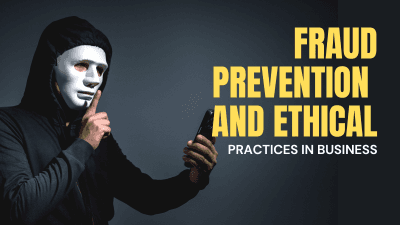
This course is designed to provide an overview of fraud prevention and ethical practices in business. Students will learn about the importance of investing in adequate resources, including staffing and funding, to prevent fraud. The course emphasizes the significance of internal audits as a cornerstone of any organization and discusses the importance of fraud hotlines and the dangers of inadequate resources and awareness.
The course explores the importance of transparency and accountability in preventing scandals and the need for companies to prioritize ethics over anxiety. It covers a case study on JP Morgan Chase's acquisition of Frank and the lessons learned from the scandal. Students will identify the need for banks to conduct reasonability tests and analytical testing of the startups they are interested in acquiring. The course also examines the need for financial institutions to prioritize ethics over anxiety when aiming for good numbers.
Upon completion, students will have a comprehensive understanding of fraud prevention and ethical practices in business. They will be able to identify the signs of fraud and understand the importance of investing in prevention rather than just detection and reporting. Students will also understand the role of internal audits in preventing fraud and the importance of fraud hotlines in preventing corporate fraud. Additionally, they will recognize the importance of transparency and accountability in preventing scandals and the need for companies to prioritize ethics over anxiety.
Field of Study: Auditing

MBA, FCPA, FCA, CFF
With more than 35 years of international experience, I am recognized as a trusted strategic advisor on a wide variety of complex governance, ethics, compliance, and reputational risk challenges. My consulting work has taken me around the world, helping corporations and organizations investigate suspicions or allegations of corruption, and working as a litigation consultant, in complex court cases involving improper financial reporting and economic crimes. I have also acted as an independent expert in different matters involving misappropriation of confidential information, fraudulent financial transactions, and international tracing and recovery of stolen funds. My success stems from my willingness to unravel the facts and circumstances of my clients’ issues and provide clarity to them so that they can make informed and confident decisions. Holder of various academic certificates of completion such as “ESG Risks and Opportunities” and “Indigenous Canada”, I have helped organizations overcome different uncertain situations and crises related to corporate moral responsibility. Involved with prestigious initiatives such as the World Economic Forum’s Expert Network, where I participate as an expert in corporate ethics, I am a strong advocate against pervasive racist, sexist, and heterosexist attitudes. I believe that reconciliation, inclusivity, equity, and diversity, as well as representativity of black, indigenous, and people of color, should be top of mind for savvy directors on forward-thinking boards. As an independent director, I am able to advise on appropriate risk mitigation strategies related to ESG issues and opportunities, such as climate change and carbon emissions, social activism, supply chain considerations, and cybersecurity. Furthermore, my professional and academic expertise allows me to sit on governance and ethics committees, audit committees, finance committees, and Boards of Trustees with fiduciary responsibilities. An award-winning lecturer at the University of Ottawa’s Faculty of Law and at the Executive MBA program, I have delivered presentations on corporate ethics and financial crimes, at some of the world’s premier universities such as Harvard University. Recognized internationally by the media, as well as by professional organizations, I am frequently asked to fuel and enrich several reflections on corporate compliance, ethical issues, and reputational risk. Over the last 10 years, I led conferences, webinars, and training sessions for many publicly-traded companies and also for various organizations and associations.
Provincial regulators of CPAs in Canada do not require that independent providers of CPD be approved to offer courses. Instead, individual CPAs are responsible for assessing whether a CPD activity meets their requirements, and may take activities from any source provided those requirements are met.
Every course offered on LearnFormula is delivered by a qualified subject matter expert or learning organization, and advances learning objectives that are relevant to the responsibilities or professional competencies of Canadian CPAs. All activities on LearnFormula are quantifiable in terms of hours, and are also verifiable, in that users receive documented evidence of their attendance via a certificate of completion after finishing a course (and this certificate is stored by LearnFormula indefinitely). Nearly 100,000 Canadian CPAs successfully satisfy their CPD requirements via LearnFormula on an annual basis.