Unpack the surprising stagnation of gender diversity in finance. This course equips you with strategies to overcome entrenched challenges and unlock organizational excellence.

One of the key doctrines of modern investment management is diversification, and yet it is remarkably absent from team construction across the entire spectrum of the investment profession.
Countless studies have shown that there is a diversity premium for organizational performance, capital allocation, and indeed, investment outcomes, and yet we seem trapped in mid-teen representation of women. More concerning, progress seems to have stagnated in recent years.
In this episode, we lament the lack of impact but, more importantly, delicately attempt to unearth the root causes of this flattening of the curve, namely the pipeline, COVID, and the DEI movement. Join us for this earnest and honest assessment of what works, what doesn't, and how a more mature discourse is needed on this generationally important topic.
Learning Objectives
By the end of this course, participants will be able to:

Chartered Alternative Investment Analyst Association
CAIA Association is a global network of forward-thinking investment professionals, redefining the future of capital allocation in a world where traditional and alternative investments are converging at an unprecedented pace. United by a commitment to improving investment outcomes, we lead with authority, educate to inspire, and connect people who turn insight into action. CAIA Association creates dynamic and captivating learning experiences designed to engage investment professionals at every level. Its programs – the CAIA Charter and the CAIA.nxt™ platform – offer critical levels of access to a comprehensive curriculum that equips the investment community with the skills and knowledge needed to build modern portfolios. CAIA Association is a global member-driven community of more than 14,000 professionals, united by a shared commitment to improving investment outcomes and building a more aligned, principled capital market system.
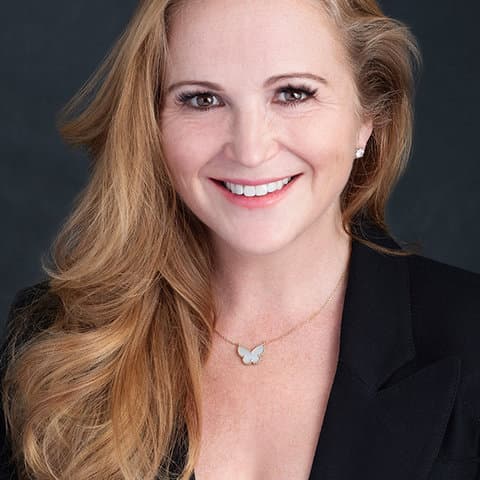
Former Chief Investment Officer of CalPERS and Angel Investor
Nicole Musicco was the Chief Investment Officer of the California Public Employees' Retirement System (CalPERS). Named CIO in February 2022, she oversaw an investment office of nearly 400 employees and managed investment portfolios of roughly $500 billion, including the Public Employees’ Retirement Fund and affiliate funds. As Chief Investment Officer, Nicole oversaw total fund investment and operational strategies. She collaborated with the managing investment directors and their teams to implement asset allocation and investment strategies. She also oversaw the Investment Office’s business management needs, including strategic planning, financial reporting, expense management, and talent management. Prior to joining CalPERS, Nicole was a partner at RedBird Capital Partners, where she led the firm’s Canadian investment business. She also previously managed the private markets investment program at the Investment Management Corporation of Ontario (IMCO). Nicole’s experience includes 16 years with the Ontario Teachers’ Pension Plan, where she led the public equity investment team and oversaw the private equity fund and co-investment program. She was responsible for opening the fund’s Asia Pacific office in Hong Kong and helped build its presence in Asia. Nicole graduated with a Bachelor of Science degree in Kinesiology from Western University in London, Ontario, and a Bachelor of Arts in Honors Business Administration and an MBA from Western’s Ivey School of Business.

Chairman and Chief Executive Officer of State Street
Ron is Chairman and Chief Executive Officer of State Street. Ron was previously President and Chief Operating Officer of State Street, and before that, President and Chief Executive Officer of State Street Investment Management, the investment management arm of State Street. He joined State Street in 2015. Prior to State Street, Ron was President of Asset Management & Corporate Services for Fidelity Investments, responsible for Fidelity’s asset management organizations, corporate functions, and enterprise technology. He served at Fidelity from 2010 to 2014. Before joining Fidelity, Ron served as President and Chief Executive Officer of BNY Mellon Asset Management in Boston. During this time, he also served as Vice Chairman of Bank of New York Mellon Corporation. Additionally, Ron oversaw all of Bank of New York Mellon’s activities in Asia. Prior to the 2007 merger of Bank of New York and Mellon, he was Vice Chairman of Mellon Financial Corporation and President and Chief Executive Officer of Mellon Asset Management. He served at Mellon and Bank of New York Mellon from 1997 to 2010. Prior to Mellon, Ron was with McKinsey & Company from 1986 to 1997 and was elected a Partner in 1992. He founded McKinsey’s Investment Management Practice and was Co-Founder of the firm’s North American Personal Financial Services Practice. During his tenure with McKinsey, Ron served in the firm’s Boston, New York, and Stockholm offices. Ron serves on the boards of Unum Corp. (where he chairs the Governance Committee), ABL Space Systems, the Federal Reserve Bank of Boston, and Beth Israel Lahey Health (Vice Chair). He also serves on several industry and not-for-profit boards, including the Institute of International Finance, the U.S.-Kuwait Business Council, the Massachusetts Competitive Partnership, Syracuse University, the Naval War College Foundation, IYRS School of Technology and Trades, the Ireland Funds, FIFA Boston 26, and WBUR. Ron received his Bachelor of Arts degree in Political Science from Syracuse University (Maxwell School) in 1980 and his Master of Business Administration from Harvard Business School in 1986.
Provincial regulators of CPAs in Canada do not require that independent providers of CPD be approved to offer courses. Instead, individual CPAs are responsible for assessing whether a CPD activity meets their requirements, and may take activities from any source provided those requirements are met.
Every course offered on LearnFormula is delivered by a qualified subject matter expert or learning organization, and advances learning objectives that are relevant to the responsibilities or professional competencies of Canadian CPAs. All activities on LearnFormula are quantifiable in terms of hours, and are also verifiable, in that users receive documented evidence of their attendance via a certificate of completion after finishing a course (and this certificate is stored by LearnFormula indefinitely). Nearly 100,000 Canadian CPAs successfully satisfy their CPD requirements via LearnFormula on an annual basis.
