Master the strategies to confidently negotiate cross-border deals, draft airtight agreements, and mitigate legal and financial risks in the global marketplace.
International commercial contracts sit at the intersection of law, commerce, and cross-border risk. Practitioners are increasingly required to advise on agreements that operate across multiple jurisdictions, legal systems, and commercial environments—where assumptions that hold domestically often break down in practice.
This session provides a practical overview of how international contracts are structured, negotiated, and enforced, with a focus on real-world drafting considerations and risk allocation. It equips practitioners with the tools to identify key legal and commercial issues early, draft with enforceability in mind, and manage uncertainty in cross-border transactions.
Key Topics Discussed:
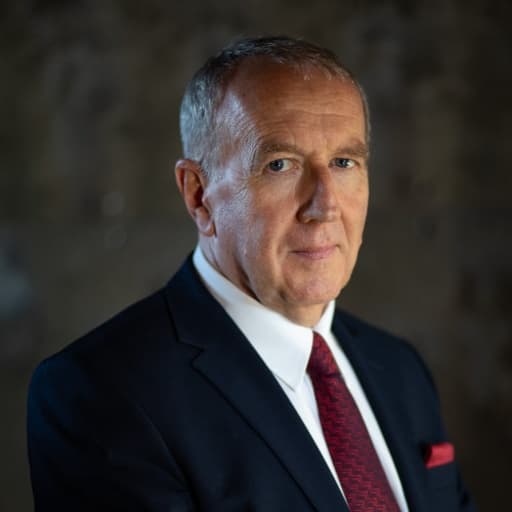
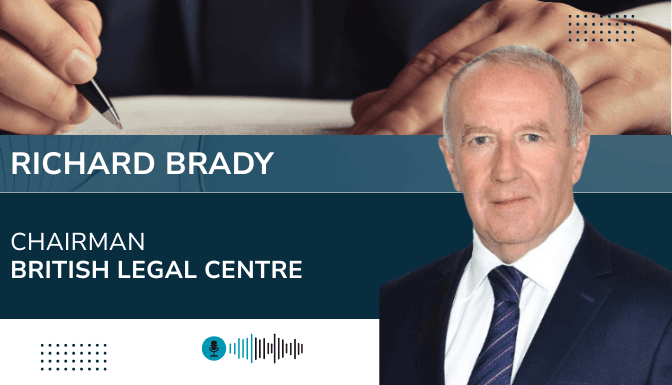
Chairman at British Legal Centre
I qualified as a UK Solicitor in 1976, and then spent 8 years as a police prosecutor in the South of England, before leaving to develop my own law practice in London in 1982. In 1997, I re-qualified in Finance and Insurance with the Chartered Institute of Insurance. I spent the next 8 years working in Finance and Insurance in the City of London. In 2005, I became aware of the opportunities for training and communication offered by new technology and qualified as a teacher to teach law and legal soft skills. Since 2005, I have been the head of an internet distance-learning company for lawyers, the British Legal Centre. My company supports and trains lawyers, judiciary, financial, and engineering professionals globally. I have been running live on-line course and traditional live training events for lawyers since the company’s inception. We develop and provide courses relating to both legal and financial topics and teach these both through live and online lessons and training events. I have taught both law and professional legal skills, to lawyers in many law and audit companies around the world, including many ‘Magic Circle’ law companies and all of the Big 4 Audit companies. I have also conducted live training courses on a wide variety of legal topics at legal departments in many multinational corporations, including Shell Oil, Master Foods, Air Liquide, and in-person training at SAUDI ARAMCO (Saudi Arabia), DAMAC (Dubai), ENKA (Turkey), EMBRACO/Whirlpool (Brazil), and MOWASALAT (Qatar). I have also provided live training for the Judiciary of several Middle Eastern Countries. I speak English, French, Spanish, Ukrainian, and Russian. My interests are rugby, walking, classical music, and Rule of Law issues.
Provincial regulators of CPAs in Canada do not require that independent providers of CPD be approved to offer courses. Instead, individual CPAs are responsible for assessing whether a CPD activity meets their requirements, and may take activities from any source provided those requirements are met.
Every course offered on LearnFormula is delivered by a qualified subject matter expert or learning organization, and advances learning objectives that are relevant to the responsibilities or professional competencies of Canadian CPAs. All activities on LearnFormula are quantifiable in terms of hours, and are also verifiable, in that users receive documented evidence of their attendance via a certificate of completion after finishing a course (and this certificate is stored by LearnFormula indefinitely). Nearly 100,000 Canadian CPAs successfully satisfy their CPD requirements via LearnFormula on an annual basis.
