Why admitting you don't have all the answers is your greatest strategic advantage as a leader.

Transitioning into a leadership position often means guiding teams of highly specialized professionals who possess more technical knowledge than you do. This dynamic can be daunting, but true leadership is not about having all the answers—it is about empowering those who do. This course explores the art of managing, supporting, and inspiring teams when you are not the subject matter expert. It delves into the essential strategies for shifting your focus from executing tasks to facilitating success, focusing on how to ask the right questions, cultivate mutual trust, and leverage the deep expertise of your team members.
The curriculum examines practical techniques to avoid the pitfalls of micromanagement, foster a collaborative work environment, and drive strategic alignment across diverse disciplines. By exploring the core elements of clear communication, active listening, and visionary leadership, this course provides a comprehensive roadmap for confidently steering any team toward its goals, regardless of your own technical background.
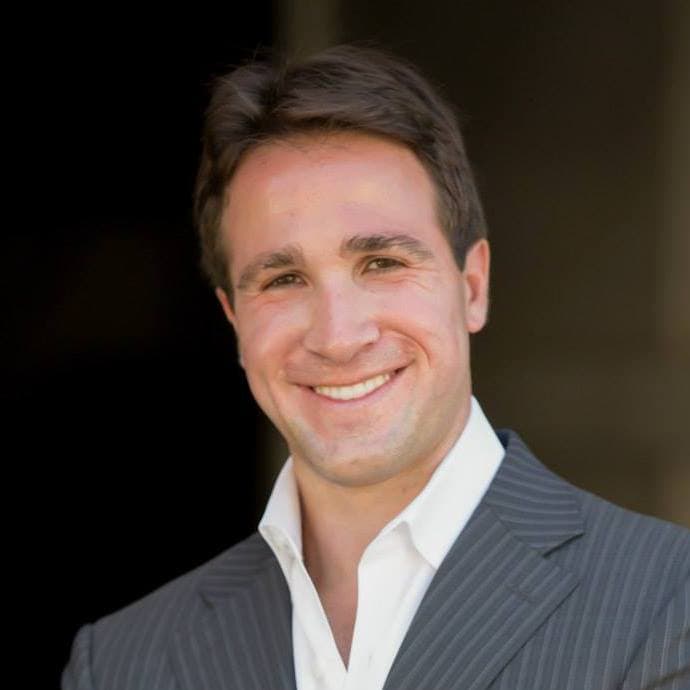
Motivational & Leadership Speaker
Adam Mendler is a nationally recognized authority on leadership, renowned for his unique ability to deliver perspective-shifting insights shaped by interviewing more than 500 of America’s most successful leaders. The creator and host of the top-rated business and leadership podcast Thirty Minute Mentors, Adam regularly elicits insights from America's top CEOs, founders, athletes, celebrities, and political and military leaders. A keynote speaker to businesses, universities, and non-profit organizations, Adam has written extensively on business and leadership, having authored more than 70 articles published in major media outlets including Forbes, Inc., and HuffPost. A Los Angeles native and lifelong Angels fan, Adam teaches graduate-level courses on leadership at UCLA, serves on the board of UCLA’s Master of Applied Statistics & Data Science program, is an emeritus member of USC’s Board of Governors, and is an advisor to numerous companies and leaders.

Founder and CEO of Sesame
David Goldhill is a senior fellow at the Manhattan Institute and the founder and CEO of Sesame, an online direct-pay marketplace for healthcare services. He is the author of Catastrophic Care: Why Everything We Think We Know about Health Care Is Wrong (2013) and The Real Costs of American Health Care (2016), as well as co-editor of the Manhattan Institute’s New York’s Next Health Care Revolution (2015). Goldhill has written extensively on the need for markets in healthcare since his 2009 cover story for The Atlantic, “How American Healthcare Killed My Father.” He was also chair of The Leapfrog Group, the nation’s leading advocate for hospital safety. Goldhill had a 30-year career in the media and entertainment industry, including as president of television at Universal Studios, CEO of the Game Show Network, CEO of TV3Russia, and CFO of Act III Communications. Goldhill has a BA in history from Harvard University and an MA in history from New York University.
Provincial regulators of CPAs in Canada do not require that independent providers of CPD be approved to offer courses. Instead, individual CPAs are responsible for assessing whether a CPD activity meets their requirements, and may take activities from any source provided those requirements are met.
Every course offered on LearnFormula is delivered by a qualified subject matter expert or learning organization, and advances learning objectives that are relevant to the responsibilities or professional competencies of Canadian CPAs. All activities on LearnFormula are quantifiable in terms of hours, and are also verifiable, in that users receive documented evidence of their attendance via a certificate of completion after finishing a course (and this certificate is stored by LearnFormula indefinitely). Nearly 100,000 Canadian CPAs successfully satisfy their CPD requirements via LearnFormula on an annual basis.
