Master proven forensic accounting techniques to accurately calculate financial harm, assess fraud impact, and build defensible economic damage models for complex litigation.
Detecting fraud is only the beginning of the problem. In practice, disputes, recovery actions, insurance claims, and litigation often turn on whether losses can be measured accurately, supported by evidence, and presented in a defensible way. Weak assumptions, double counting, and poorly structured calculations can undermine otherwise strong fraud cases and create significant exposure during negotiations or court proceedings.
This session examines how fraud losses are quantified from a practical financial and evidential perspective. Using real-world loss modelling concepts, participants will explore how direct losses, hidden costs, procurement inflation, payroll abuse, asset diversion, and lost profits are analysed and linked to transaction evidence. The webinar focuses on building defensible damages models suitable for investigations, recovery actions, expert reporting, and legal review.
Key Topics Discussed:
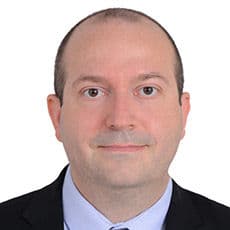
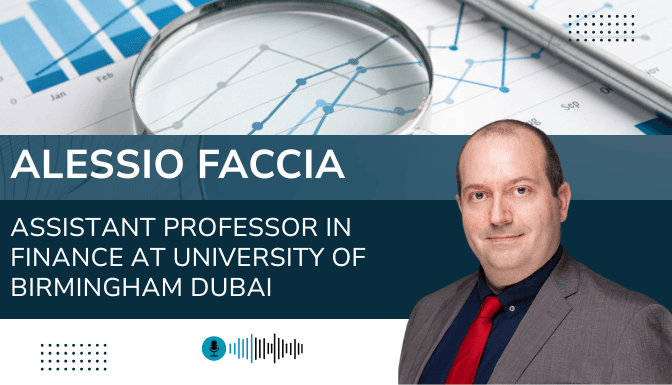
Assistant Professor in Finance | University of Birmingham Dubai
Dr. Alessio Faccia, an accomplished academic and corporate trainer, has a distinguished finance, accounting, and business background. His expertise spans over 16 years, during which he has notably contributed to finance and accounting through his roles as an assistant professor, auditor, chartered accountant, CFO advisor, and corporate trainer. Dr. Faccia’sacademic journey includes prestigious roles at several universities, including the University of Birmingham and Coventry University, where he taught various finance and accounting modules. His extensive involvement in corporate training further enriches Dr. Faccia’s professional experience. He has provided training in diverse areas such as finance and accounting, management and HR, technology, oil and gas, and legal matters to many organizations. These organization encompass various sectors, including government bodies, financial institutions, energy companies, and real estate firms.. These organizations encompass various sectors, including government bodies, financial institutions, energy companies, and real estate firms. His proficiency is further demonstrated by his numerous publications, research contributions, and a strong academic record, underscoring his commitment to advancing knowledge in his field. Dr. Faccia’s work is a testament to his dedication to enhancing the skills and knowledge of professionals across various industries globally.
Provincial regulators of CPAs in Canada do not require that independent providers of CPD be approved to offer courses. Instead, individual CPAs are responsible for assessing whether a CPD activity meets their requirements, and may take activities from any source provided those requirements are met.
Every course offered on LearnFormula is delivered by a qualified subject matter expert or learning organization, and advances learning objectives that are relevant to the responsibilities or professional competencies of Canadian CPAs. All activities on LearnFormula are quantifiable in terms of hours, and are also verifiable, in that users receive documented evidence of their attendance via a certificate of completion after finishing a course (and this certificate is stored by LearnFormula indefinitely). Nearly 100,000 Canadian CPAs successfully satisfy their CPD requirements via LearnFormula on an annual basis.
