Cut through the hype to evaluate, select, and implement AI-powered HR platforms that streamline operations, enhance employee experience, and deliver measurable business value.
HR technology selection has shifted from simple feature comparison to risk and governance design. AI-enabled recruiting, talent intelligence, performance analytics, learning platforms, and employee listening tools can significantly improve speed and decision quality—but they also introduce new risks, including biased outcomes, opaque decision logic, weak vendor controls, privacy exposure, and poor adoption when workflows are not designed effectively.
This webinar is designed for HR professionals globally who lead HRIT selection, collaborate with procurement and IT, or oversee people analytics and AI governance. It provides a structured, practical approach to technology selection: defining outcomes and decision points, mapping data flows and controls, evaluating vendors beyond demonstrations, and building implementation plans that deliver value without creating compliance risks.
Where relevant, the session references widely recognised global frameworks used across HR, legal, and security functions, including AI risk and governance standards such as NIST AI Risk Management Framework and ISO/IEC 42001, as well as privacy principles under General Data Protection Regulation and standards such as ISO/IEC 27701 aligned with ISO/IEC 27001. These are presented as practical benchmarks that can be applied across jurisdictions, even where not legally required.

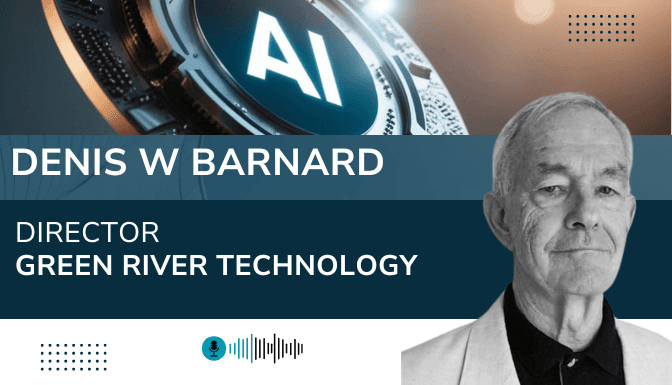
Director | Green River Technology World
Author of “Selecting and Implementing HR & Payroll Software” and “Mission:HR”, Denis Barnard is a leading authority on HR and payroll technology, with over 30 years of experience spanning Higher Education, Manufacturing, Local Government, Media, and the Tech sector. Denis brings a unique dual-lens capability—guiding both buyers and vendors through the complexities of HRIS, payroll, and workforce transformation. His work spans strategic advisory, system benchmarking, implementation diagnostics, and post-deployment optimisation. Denis is a pioneer of comparison-based software selection, having launched the UK’s first HR & payroll system comparator HRcomparison.com in 2009, and more recently launched the HRSoftwareFinder.com platform.” Aligned with the vanguard of HR thinking on how to decode the Digital Revolution, Denis’s approach goes beyond traditional HR consulting. He reverse-engineers legacy HR processes to unlock automation, uses AI to uncover unseen workforce dynamics, and designs solutions that turn HR from an administrative burden into a strategic growth engine. He’s a recognised speaker, educator, and content creator—running workshops, webinars, and publishing practical frameworks like the Three Fundamental Laws and Six Pillars of WFH, built for the realities of a post-pandemic, AI-enabled world of work.
Provincial regulators of CPAs in Canada do not require that independent providers of CPD be approved to offer courses. Instead, individual CPAs are responsible for assessing whether a CPD activity meets their requirements, and may take activities from any source provided those requirements are met.
Every course offered on LearnFormula is delivered by a qualified subject matter expert or learning organization, and advances learning objectives that are relevant to the responsibilities or professional competencies of Canadian CPAs. All activities on LearnFormula are quantifiable in terms of hours, and are also verifiable, in that users receive documented evidence of their attendance via a certificate of completion after finishing a course (and this certificate is stored by LearnFormula indefinitely). Nearly 100,000 Canadian CPAs successfully satisfy their CPD requirements via LearnFormula on an annual basis.
