How to use specialized AI for Canadian tax research, workpapers, and CPD without risking client data or professional standards.
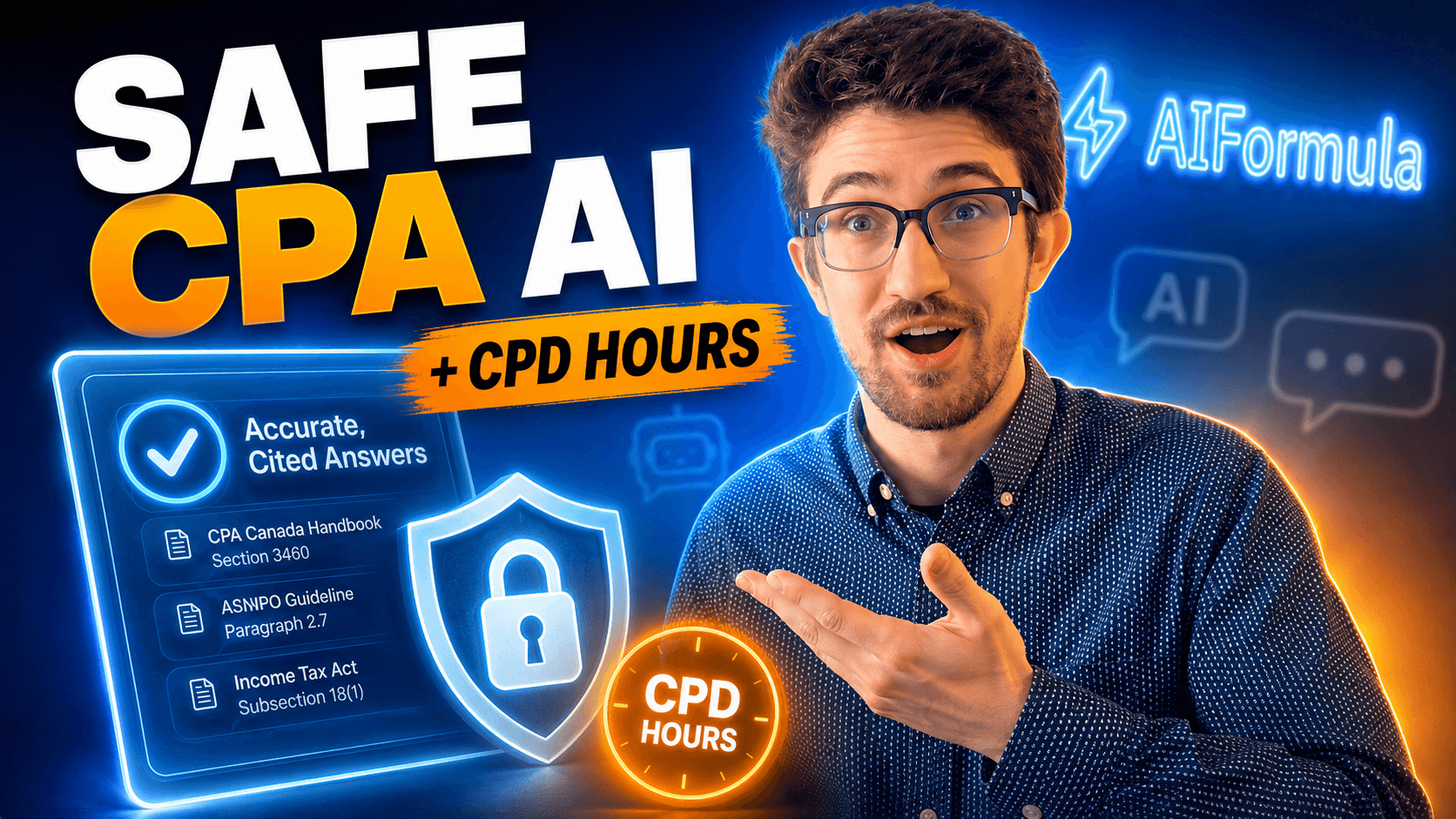
Many Canadian CPAs already use general AI tools for client work, typing tax questions into a chatbot or pasting in a client's figures to check something. The practice is fast and feels harmless, but it carries two real risks. The client's information leaves the firm's control, and a general model can return an answer that sounds certain while being wrong, leaving the professional to catch the error. This course introduces AI by CPDFormula, a research and workpaper tool built specifically for Canadian accounting practice. It is grounded in a curated library of primary Canadian sources, including the Income Tax Act, CRA guidance, and the GST/HST rules, and it links every claim back to the passage it came from so each conclusion can be confirmed against the law. It also gives practitioners a private place to work with client files.
The course works through the tool's two distinct functions. The first is grounded research and drafting, where a practitioner asks a question in plain language, receives a structured and cited answer, and can turn that answer into a file memo or a client letter. The second is deterministic spreadsheet work, where a client file run through a workpaper skill produces the same reviewable schedule every time, with each step logged and every questionable row flagged for a human decision. The modules cover prompt craft, the verification habits that make a cited answer defensible, the ten workpaper skills available for tasks such as reconciling bank records to the general ledger and estimating GST/HST, and the file and privacy parameters that apply to uploaded client data. Later modules address fitting the tool into an ordinary week, handling the objections a team is likely to raise, and logging eligible research time toward continuing professional development (CPD) requirements.
Learning Objectives
This course is intended for Canadian CPAs and accounting professionals who want to use AI safely in tax, accounting, and audit work, and it assumes no technical background beyond typing a question and opening a link. Throughout, AI by CPDFormula is presented as research assistance, not professional advice. The tool prepares a first pass and flags what needs review, while the final judgment and sign-off remain with the CPA.
Online Learning for Modern Accountants
Accounting Education Group provides online professional development and continuing education courses for accounting, bookkeeping, tax, and finance professionals. Our training is designed to support ongoing learning through practical, relevant, and accessible educational content that helps professionals maintain and expand their knowledge in an evolving business environment.
Provincial regulators of CPAs in Canada do not require that independent providers of CPD be approved to offer courses. Instead, individual CPAs are responsible for assessing whether a CPD activity meets their requirements, and may take activities from any source provided those requirements are met.
Every course offered on LearnFormula is delivered by a qualified subject matter expert or learning organization, and advances learning objectives that are relevant to the responsibilities or professional competencies of Canadian CPAs. All activities on LearnFormula are quantifiable in terms of hours, and are also verifiable, in that users receive documented evidence of their attendance via a certificate of completion after finishing a course (and this certificate is stored by LearnFormula indefinitely). Nearly 100,000 Canadian CPAs successfully satisfy their CPD requirements via LearnFormula on an annual basis.
