An analysis of the causes of the financial crisis and the accounting policies that made it worse.
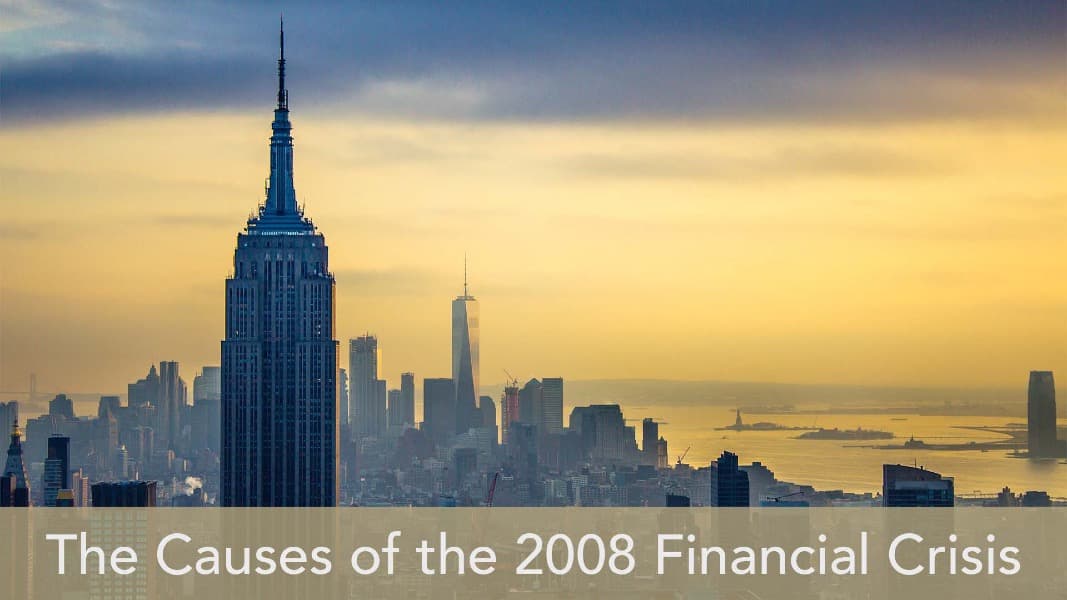
The true causes of the 2008 financial crisis remain the subject of ongoing debate. While the prevailing narrative has focused on insufficient regulation and led to the enactment of the Dodd-Frank Act, this course presents an alternative, evidence-based perspective. Drawing from the work of Peter J. Wallison—author of Hidden in Plain Sight: What Caused the World’s Worst Financial Crisis and Why It Could Happen Again—the session explores how U.S. government housing policies and subprime lending fueled a massive housing price bubble that ultimately destabilized the global economy.
The course also examines how accounting rules enforced by the SEC and FASB exacerbated the crisis by weakening financial institutions at a critical moment. You'll gain insight into how the reversal of these policies in early 2009 played a role in the recovery. This lecture, supported by accompanying readings, challenges conventional wisdom and encourages participants to critically assess the regulatory and financial structures that contributed to the crisis—and could do so again.
Peter J. Wallison, a codirector of AEI’s program on financial policy studies, researches banking, insurance, and securities regulation. As general counsel of the U.S. Treasury Department, he had a significant role in the development of the Reagan administration’s proposals for the deregulation of the financial services industry. He also served as White House counsel to President Ronald Reagan and is the author of Hidden in Plain Sight (2015), and Ronald Reagan: The Power of Conviction and the Success of His Presidency (Westview Press, 2002). His other books include Competitive Equity: A Better Way to Organize Mutual Funds (2007); Privatizing Fannie Mae, Freddie Mac, and the Federal Home Loan Banks (2004); The GAAP Gap: Corporate Disclosure in the Internet Age (2000); and Optional Federal Chartering and Regulation of Insurance Companies (2000). He also writes for AEI’s Financial Services Outlook series.
Provincial regulators of CPAs in Canada do not require that independent providers of CPD be approved to offer courses. Instead, individual CPAs are responsible for assessing whether a CPD activity meets their requirements, and may take activities from any source provided those requirements are met.
Every course offered on LearnFormula is delivered by a qualified subject matter expert or learning organization, and advances learning objectives that are relevant to the responsibilities or professional competencies of Canadian CPAs. All activities on LearnFormula are quantifiable in terms of hours, and are also verifiable, in that users receive documented evidence of their attendance via a certificate of completion after finishing a course (and this certificate is stored by LearnFormula indefinitely). Nearly 100,000 Canadian CPAs successfully satisfy their CPD requirements via LearnFormula on an annual basis.
