Leverage behavioral psychology and critical thinking to outsmart sophisticated fraudsters and detect the subtle red flags of financial crime that automated systems miss.
Fraud and financial crime prevention is often treated as a systems problem—managed through controls, surveillance, reporting lines, and compliance metrics. Yet many of the most significant breakdowns occur long before an alert is triggered, shaped instead by culture, behavior, incentives, and organizational silence.
“The Human Edge in Fraud and Financial Crime Prevention” examines the critical role of the human and cultural dimension in strengthening prevention frameworks. It explores how weak speak-up environments, fear-based leadership, misaligned incentives, and fragmented accountability can create conditions where misconduct develops unnoticed or unreported.
This session shifts the focus from detection after the fact to prevention at the source. Participants will explore how behavioral drivers influence fraud risk and how leadership, communication, trust, and workplace design directly impact compliance outcomes and investigative effectiveness.
Designed for fraud examiners, compliance professionals, investigators, and leaders, the session provides practical strategies to surface cultural risk early, improve escalation pathways, and build environments where ethical conduct becomes a core operational strength.
Key Topics Discussed:

Managing Principal | Bostic Principled Solutions, LLC
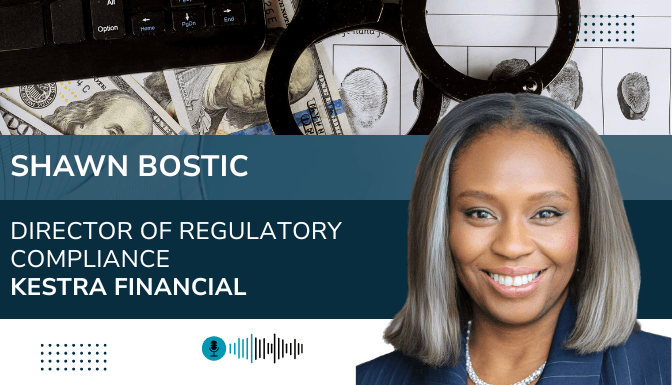
Dr. Shawn Bostic, DM, CFE, is the Managing Principal of Bostic Principled Solutions, LLC, an independent consulting firm specializing in regulatory compliance, organizational risk, ethical leadership, and professional judgment. She brings more than 30 years of financial-services experience across broker-dealers, investment advisers, mutual fund companies, and consulting organizations. Her career includes service as a Chief Compliance Officer and Director of Regulatory Compliance, along with extensive experience managing regulatory examinations, internal investigations, branch reviews, customer complaints, supervisory testing, risk assessments, and interactions with the SEC, FINRA, and state regulators. Dr. Bostic holds a Doctor of Management in Organizational Leadership and is a Certified Fraud Examiner. Her doctoral research examined leadership behavior within the compliance profession, and her research proposal was presented at the University of Cambridge. She is also an author, speaker, and continuing-education instructor whose work explores the intersection of compliance, human behavior, organizational culture, fraud prevention, and artificial intelligence. Through her signature Human Edge framework, Dr. Bostic helps professionals strengthen the capabilities technology cannot replace: moral attentiveness, independent thinking, situated judgment, ethical courage, and meaningful human connection. Her courses translate complex regulatory and behavioral concepts into practical guidance that professionals can apply when making decisions, identifying risk, investigating concerns, and protecting organizational integrity.
Provincial regulators of CPAs in Canada do not require that independent providers of CPD be approved to offer courses. Instead, individual CPAs are responsible for assessing whether a CPD activity meets their requirements, and may take activities from any source provided those requirements are met.
Every course offered on LearnFormula is delivered by a qualified subject matter expert or learning organization, and advances learning objectives that are relevant to the responsibilities or professional competencies of Canadian CPAs. All activities on LearnFormula are quantifiable in terms of hours, and are also verifiable, in that users receive documented evidence of their attendance via a certificate of completion after finishing a course (and this certificate is stored by LearnFormula indefinitely). Nearly 100,000 Canadian CPAs successfully satisfy their CPD requirements via LearnFormula on an annual basis.
