Master LTB procedures and elevate your advocacy with proven strategies to navigate hearings, streamline case preparation, and confidently represent your clients.
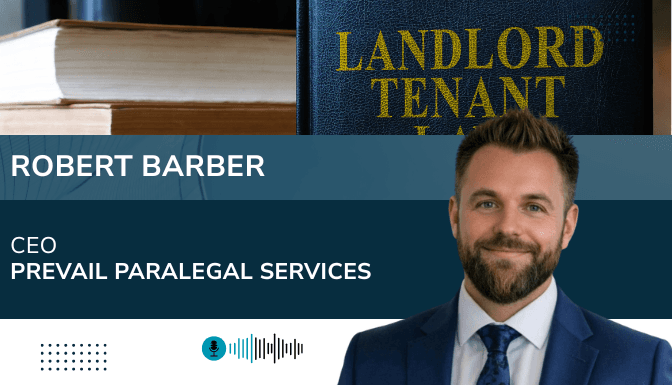
Landlord and Tenant Board practice has become one of the most procedurally demanding and outcome-sensitive areas of tribunal work in Ontario. Paralegals are required to operate within strict statutory frameworks while managing high-conflict disputes where procedural precision often determines outcomes.
This session examines the realities of LTB practice from a strategic and procedural perspective, focusing on the practical demands of preparing for and conducting tribunal hearings in a high-volume, rules-driven environment.
Key Topics Discussed:

CEO | Prevail Paralegal Services
Robert Barber is a legal executive and tribunal adjudicator working at the intersection of residential tenancy law and administrative law practice in Ontario. He operates within the Landlord and Tenant Board (LTB) system, where he focuses on high-conflict, procedurally complex matters requiring strategic advocacy and precise application of statutory requirements. He is associated with Prevail Paralegal Services Professional Corporation and has extensive experience representing both landlords and tenants in residential tenancy disputes. His practice includes eviction proceedings, applications under the Residential Tenancies Act, and matters involving allegations of serious illegal conduct and procedural defects in notices. Robert Barber is also active in legal education and professional development, frequently participating as a presenter and panelist in Law Society of Ontario continuing professional development (CPD) programs. His speaking topics include landlord and tenant law updates, procedural changes at the Landlord and Tenant Board, best practices for handling self-represented parties, and strategies for client development in legal practice. He holds multiple professional roles in governance and legal education, including board leadership positions and advisory roles in disability rights advocacy through ARCH Disability Law Centre. He is also involved in Indigenous education initiatives and community governance in the Niagara region. His professional credentials include licensing as a paralegal in Ontario, designation as a notary public, and certification in adjudication for administrative tribunals.
Provincial regulators of CPAs in Canada do not require that independent providers of CPD be approved to offer courses. Instead, individual CPAs are responsible for assessing whether a CPD activity meets their requirements, and may take activities from any source provided those requirements are met.
Every course offered on LearnFormula is delivered by a qualified subject matter expert or learning organization, and advances learning objectives that are relevant to the responsibilities or professional competencies of Canadian CPAs. All activities on LearnFormula are quantifiable in terms of hours, and are also verifiable, in that users receive documented evidence of their attendance via a certificate of completion after finishing a course (and this certificate is stored by LearnFormula indefinitely). Nearly 100,000 Canadian CPAs successfully satisfy their CPD requirements via LearnFormula on an annual basis.
